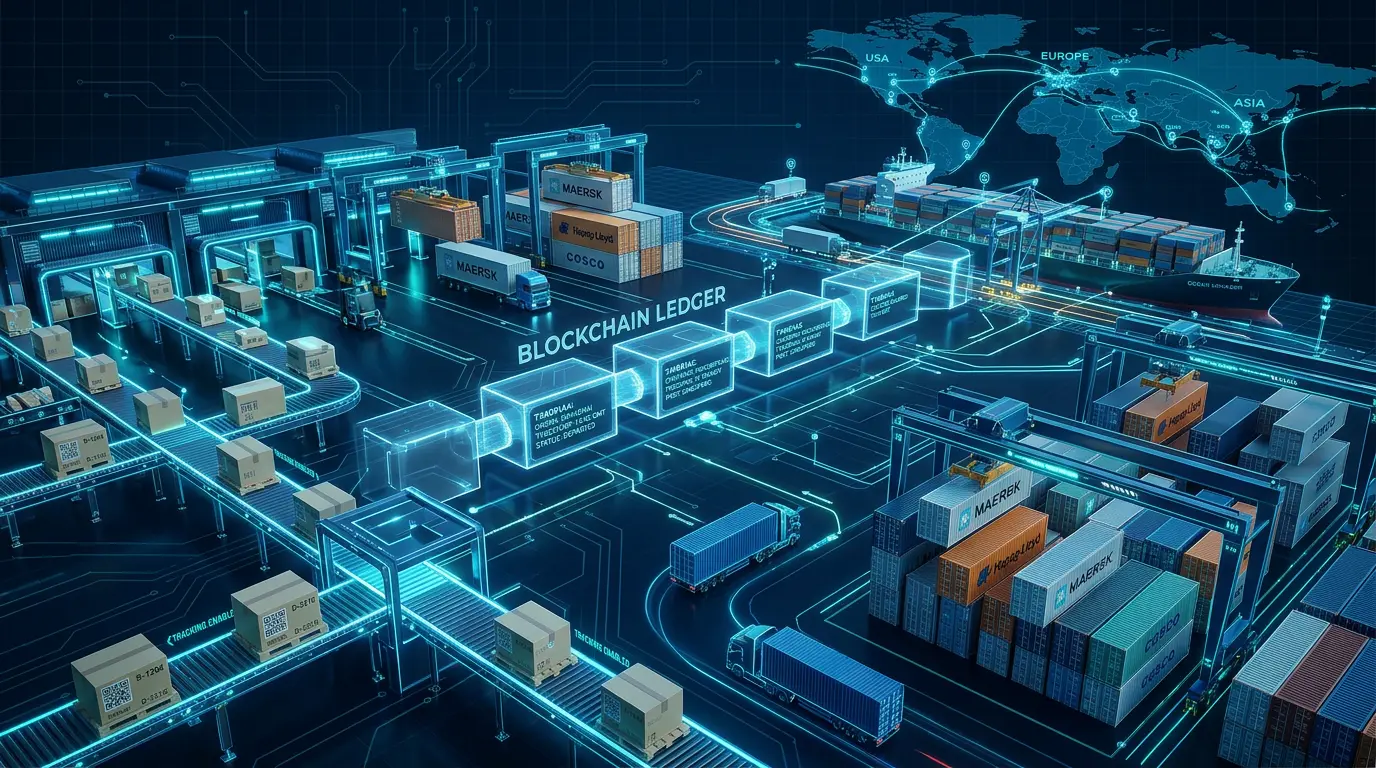
Blockchain in Supply Chain: Revolutionizing Logistics
How distributed ledger technology is transforming supply chain transparency, traceability, and efficiency across industries.
Supply chains are complex, opaque, and often inefficient. A single product may pass through dozens of parties—raw material suppliers, manufacturers, logistics providers, customs brokers, distributors, and retailers—each maintaining their own records in siloed systems. This fragmentation leads to disputes, delays, fraud, and a lack of visibility that costs the global economy billions annually.
Blockchain offers a shared source of truth that all participants can trust. By recording transactions on an immutable, distributed ledger, every party sees the same data in real time. No single entity controls the record, and tampering is practically impossible. Here's how enterprises are putting this to work.
End-to-End Traceability
From raw materials to the end consumer, every step can be recorded on a blockchain. Each transfer of custody, quality check, temperature reading, or location update becomes a verifiable event. Food companies can trace contamination outbreaks in minutes instead of weeks—Walmart and IBM's Food Trust network demonstrated this with mango traceability, reducing investigation time from days to seconds.
Luxury brands use blockchain to verify authenticity and combat counterfeiting. Pharmaceuticals can ensure drug integrity through the entire cold chain. Automotive manufacturers track parts from factory to assembly line. The common thread: when something goes wrong, you know exactly where and when.
In supply chain, the question isn't whether you have data—it's whether you have data you can trust. Blockchain turns claims into proof.
Smart Contracts for Automation
Payment upon delivery, automatic reordering when stock runs low, penalty clauses for late shipments, and insurance payouts for damaged goods can be encoded as smart contracts. When predefined conditions are met—e.g., a shipment is confirmed received at a warehouse—actions execute automatically. No manual invoicing, no disputes over whether delivery occurred.
Trade finance is a prime use case. Letters of credit and supply chain financing traditionally involve piles of paperwork and weeks of processing. Blockchain-based solutions like we.trade and Marco Polo have reduced settlement times and improved liquidity for suppliers. The same logic applies to purchase orders, bills of lading, and customs documentation.
Sustainability and Compliance
Carbon footprint, ethical sourcing, and regulatory compliance require verifiable data. Consumers and regulators increasingly demand proof—not marketing claims. Blockchain provides an auditable trail that regulators and consumers can trust. Companies can prove their sustainability claims with immutable evidence: certified sustainable sourcing, emissions data, labor conditions.
Initiatives like the IBM Food Trust, VeChain's partnerships with luxury and retail brands, and various carbon credit platforms show the breadth of applications. EU regulations on deforestation-free supply chains and conflict minerals will further drive adoption of traceability solutions.
Measurable Benefits
- Reduced fraud and counterfeit goods—authenticity verified at every step
- Faster dispute resolution—single source of truth eliminates conflicting records
- Lower administrative costs—automation replaces manual reconciliation
- Improved inventory management—real-time visibility reduces overstock and stockouts
- Enhanced supplier relationships—transparency builds trust and enables collaboration
Blockchain won't solve every supply chain problem overnight. Integration with legacy systems, interoperability between networks, and adoption across ecosystems take time. But for industries where traceability, compliance, and trust matter most—food, pharma, luxury, and manufacturing—blockchain is moving from pilot to production.