Understanding NFTs: Beyond Digital Art
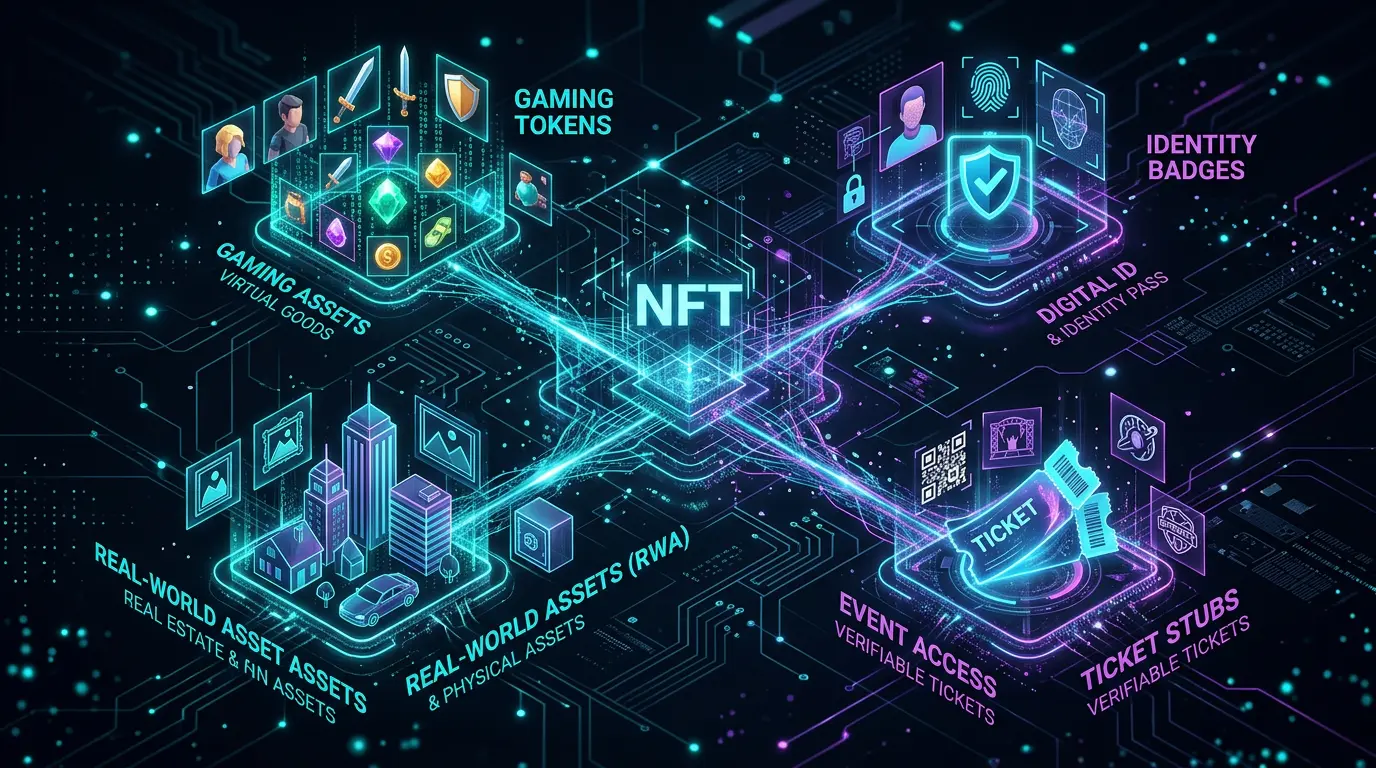
NFTs are evolving beyond collectibles. Discover use cases in gaming, identity, ticketing, and real-world asset tokenization.
When most people think of NFTs, they picture digital art and profile pictures—the Bored Apes and CryptoPunks that dominated headlines in 2021. But non-fungible tokens are far more versatile than collectibles. At their core, NFTs are programmable certificates of ownership that can represent any unique asset—digital or physical—and are unlocking new models across industries from gaming to real estate.
The technology behind NFTs—unique identifiers on a blockchain, metadata storage, and transferable ownership—creates a trustless way to prove who owns what. This has implications far beyond the art market. Let's explore the most promising use cases emerging today.
Gaming and In-Game Assets
NFTs enable true ownership of in-game items, characters, skins, and virtual land. Unlike traditional games where publishers control every asset, blockchain-based games let players trade, sell, or carry items across games and metaverses. This shifts power from game publishers to players and creates sustainable economies around virtual worlds.
Projects like Axie Infinity, Illuvium, and Star Atlas are building persistent economies where player effort translates into real value. Even traditional game studios are experimenting with NFT integration—Ubisoft's Quartz platform and Square Enix's blockchain initiatives signal industry interest. The key challenge remains balancing player ownership with game design and preventing pay-to-win dynamics.
The future of gaming isn't about owning a sword in one game—it's about owning your identity, reputation, and assets across an entire ecosystem of experiences.
Identity and Credentials
Soulbound tokens (SBTs) and verifiable credentials use NFT-like structures for identity. Unlike transferable NFTs, these are non-transferable—they're bound to your wallet and represent who you are, not what you own. Think diplomas, certifications, membership badges, professional licenses, and reputation scores—all verifiable on-chain without relying on centralized issuers.
Vitalik Buterin's SBT concept has sparked initiatives like Gitcoin Passport for sybil resistance, educational credential platforms, and professional certification systems. The Ethereum Attestation Service and similar standards are making it easier to issue and verify these credentials across applications.
Ticketing and Access
Event tickets as NFTs eliminate counterfeiting and enable secondary markets with programmable royalty splits. When a ticket is resold, the original artist or venue can automatically receive a percentage—something impossible with paper or traditional digital tickets. NFTs also gate access to experiences, communities, and exclusive content, creating new monetization models for creators.
Companies like Ticketmaster and Live Nation are piloting NFT tickets. Music festivals, conferences, and sports events are adopting the model. The benefits extend beyond resale: organizers gain visibility into secondary markets, can offer perks to ticket holders, and build lasting relationships with attendees.
Real-World Asset Tokenization
Real estate, fine art, luxury goods, and commodities are being tokenized as NFTs. Fractional ownership becomes possible—you can own a share of a building or a painting. Liquidity improves dramatically since tokens can be traded 24/7. Settlement is faster, and the ownership record is immutable and transparent.
Platforms like Lofty (real estate), Masterworks (art), and various commodity tokenization projects are bringing traditional assets on-chain. This bridges traditional finance with blockchain in meaningful ways, though regulatory clarity and custody solutions remain critical for mainstream adoption.
What's Next
- Dynamic NFTs that change based on off-chain data or user actions
- Composable NFTs that combine multiple assets or permissions
- Privacy-preserving credentials for sensitive identity data
- Standardization across chains (ERC-6551, ERC-5192) for richer NFT capabilities
The NFT narrative has moved beyond speculation. The most impactful applications will be those that solve real problems—ownership, provenance, access, and identity—in ways that weren't possible before blockchain technology.